Books About Farming Dads — For the Kids Growing Up on the Land
· 4 min read


The child who grows up on the land has something rare.
They have been part of their father's work from the beginning — riding in the cab of the tractor, watching the planting and the harvest, absorbing the rhythms of the seasons and the specific relationship to land and weather that defines farming life. Their childhood is not separate from their dad's work. It is woven through it.
But understanding it — having the vocabulary for it, being able to talk about it with others, knowing the names of the things they have watched their dad do — is a different matter. A child can grow up on a farm and still not have the language to say that's the header, that's a furrow, those are sheep being shorn to someone who does not already know.
A book about a farming dad gives the child who lives it the vocabulary for what they already know. And for the child who has only glimpsed it — who visits occasionally, who grows up in a regional town and knows their dad does something on the land without fully knowing what — it is a window into a world that would otherwise be hard to access.
The world a farming dad knows
Few professions are as deeply connected to place, season and the long view as farming. The farmer's relationship to the land is not just occupational. It is cultural — a set of practices, relationships and ways of understanding the natural world that are passed down through generations.
A farming dad who opens an alphabet book about farming with his young child is not just sharing his job. He is sharing his inheritance — the knowledge accumulated by his family across the years they have worked this particular piece of land. The vocabulary in the book is his vocabulary. The illustrations reflect his paddocks, his animals, his machinery.
And the child beside him is receiving something that cannot be transmitted through ordinary conversation: a structured introduction to the world they are growing up in, rendered in language they can hold and return to.
H is for Harvest. The child looks at the illustration. They have seen the header before — the dust and the grain and the long late summer days. But now it has a name that goes with a letter. H is for Harvest. And dad says something about what harvest means to him — the culmination of a year's work, the relief, the exhaustion, the particular satisfaction.
What the farming book gives a city child
Not all farming dads live on farms. Many have grown up in agricultural families and now live in cities, carrying the farming world as part of their identity without it being part of their daily life. For these dads — and for the children they are raising in cities who have limited access to the world their dad came from — a book about farming is a form of cultural transmission.
The city child whose dad grew up farming, who spent school holidays on the land and still talks about it with a particular kind of attention — that child has a heritage they may not fully understand yet. A book about farming puts that heritage in their hands in a format they can engage with at age two or three, years before they can meaningfully engage with it in any other way.
And the farming dad who reads this book with his city-raised child is doing something quiet and significant: passing on a way of understanding the world — the particular patience, attentiveness and respect for natural systems that farming produces — through the medium of a bedtime book.
The conversation a farming book starts
The farming dad who reads an alphabet book about farming will find that certain pages produce responses he did not expect.
D is for Dam. His four-year-old says: is that what we swim in at Grandad's? And suddenly they are talking about the property, the summers, the whole world the child has visited but only half understood. The book provides the vocabulary and the opening. Dad provides the story.
S is for Shearing. His three-year-old says: do the sheep mind? And the farming dad is explaining, for the first time, the relationship between a farmer and his animals — the care that underlies what can look, from a child's perspective, like an alarming process.
They're okay. It doesn't hurt. They're actually more comfortable afterwards. The book is two pages behind them now and they are still talking.
These conversations — prompted by the book, located in the child's world, full of the specific knowledge only this dad can provide — are what the book is really for.
The Farm Starts on Page One.
Daddy's Book Club is here for all types of dads.
Fishing dads, outdoor dads, footy dads, farming dads, first responder dads, tradie dads, foodie dads, military dads, car dads, fitness dads, creative dads — and every other kind of dad in between.
Browse the collection:
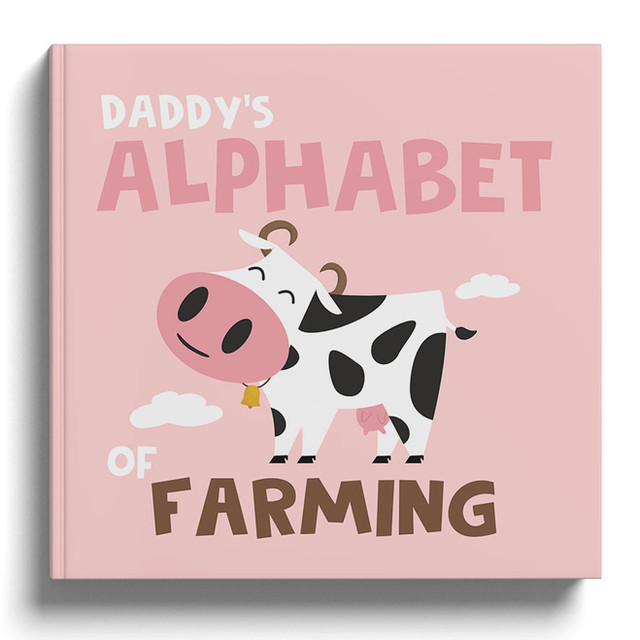
Daddy's Alphabet of Farming
Daddy's Alphabet of Tools
Daddy's Alphabet of Camping
Daddy's Alphabet of Fishing
(and more — with new titles added all the time)
For the full guide to books about dads' jobs, read Books About Tradie Dads or Books About Mechanic Dads.
Read more. Save more. 2 books 10% off, 4 books 20% off, 6 books 30% off, 8 books 35% off, 10 or more 40% off. Free delivery on orders of $99 or more after savings. Australia only. | View Catalogue
Shop the idea
Read more. Save more.
2 books 10% off, 4 books 20% off, 6 books 30% off, 8 books 35% off, 10 or more 40% off. Free delivery on orders of $99 or more after savings. Australia only.
Build his bookshelfBooks from this article
Start with these